How to Store Crystal Jewelry and Stones Without Scratches
Quick Answer
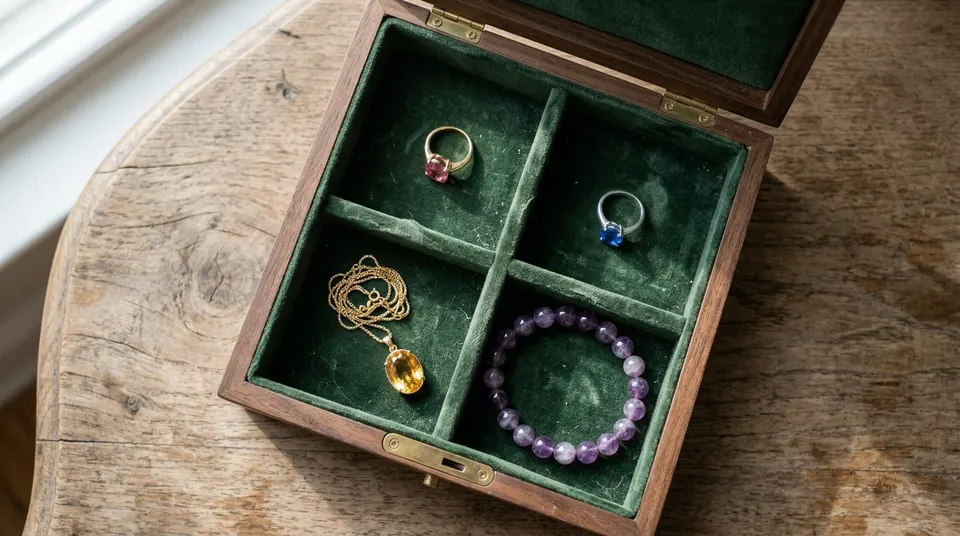
Store crystal jewelry so no two pieces touch. Use a soft cloth pouch or a lined slot for each item, and keep softer stones (pearl, fluorite, turquoise, opal, moonstone) away from harder ones like quartz, sapphire and diamond. Keep the box closed, dry and out of direct sun and away from heat sources. Store pearls in breathable fabric rather than plastic, lay bead bracelets flat and fasten chains before putting them away.
On this page
- Why Do Crystals Scratch Each Other in Storage?
- Which Stones Need Their Own Pouch?
- How Do You Sort a Jewelry Collection for Storage?
- How Do Light, Heat and Humidity Affect Stored Crystals?
- How Should You Store Pearls, Chains and Bead Bracelets?
- How Should You Lay Out a Jewelry Box?
- Frequently Asked Questions
- Our Take
- Sources
Key Takeaways
- Give each piece its own pouch, slot or compartment; GIA's general rule is to separate items so they don't scratch one another.
- Sort by Mohs hardness: quartz-family stones (7) scratch moonstone (6-6.5), opal (5-6.5), turquoise (5-6), fluorite (4) and pearl (2.5).
- Keep amethyst and opal out of strong light and away from heat; GIA notes some amethyst color can fade and heat can craze opal.
- Store pearls in a soft, breathable pouch, never a plastic bag.
- Lay stretch-cord bead bracelets flat, and fasten or hang chains so they don't tangle.
Why Do Crystals Scratch Each Other in Storage?
Stones scratch each other because hardness differs from one mineral to the next, and the harder stone always wins. Gemologists measure this with the Mohs scale, which ranks minerals by scratch resistance, with diamond at the top at 10. GIA rates quartz at 7, "less hard than topaz, ruby and sapphire," and notes that only a diamond can scratch a diamond [1]. The same GIA article warns that you shouldn't store a diamond next to topaz or any other gem in your jewelry box, because the diamond could scratch it.
That matters for crystal jewelry because so much of it is quartz. Amethyst, citrine, rose quartz and clear quartz are all varieties of quartz, and GIA rates both amethyst and rose quartz at 7 [3] [4]. A quartz bead or point loose in a drawer can scratch every stone softer than 7 that it touches.
Softness is only half the picture. GIA defines durability as a gem's ability to withstand wear, heat, light, household chemicals and changes in humidity, and it separates hardness (scratch resistance) from toughness (resistance to chipping and breaking). A hard stone can still chip if it knocks against another hard stone, so even two quartz pieces are better kept apart.
Which Stones Need Their Own Pouch?
Any stone below 7 should get its own pouch, because ordinary quartz jewelry can scratch it. The table sums up what GIA's care guides say for common jewelry stones; more stones are listed side by side in our crystal care chart.
| Stone | Mohs hardness | Main storage risk | How to store it |
|---|---|---|---|
| Pearl | 2.5 | Scratched by almost anything; damaged by chemicals, cosmetics and perspiration | Own soft, breathable pouch; never a plastic bag |
| Fluorite | 4 | Scratches easily; sensitive to heat and temperature changes | Own padded pouch; keep away from heat |
| Turquoise | 5-6 | Discolored by chemicals, cosmetics and skin oils | Own pouch; wipe before storing; keep away from perfume |
| Opal | 5-6.5 | Heat from intense light can cause crazing; sudden temperature changes can fracture it | Own pouch, in a closed box away from sun and heat |
| Moonstone | 6-6.5 | Poor toughness and two cleavage directions; can chip if knocked | Own padded slot; don't let it rattle |
| Amethyst | 7 | Some color can fade with prolonged intense light | Closed box, out of direct sun |
| Rose quartz | 7 | Can scratch softer stones; generally stable to light and heat | Separate from softer stones |
| Ruby, sapphire | 9 | Scratch quartz and everything softer | Separate slot |
| Diamond | 10 | Scratches every other gem | Separate slot |
GIA gives the pearl figure as 2.5, "very soft and easily scratched or abraded," and lists hair spray, perfume, cosmetics and even perspiration among the things that can damage it [7]. A GIA Gems & Gemology article compares a ruby at 9 with a faceted fluorite at 4 and notes that the fluorite is far more easily scratched [10]. Turquoise ranks 5 to 6 and can be discolored by chemicals, cosmetics, skin oils and perspiration [8].
Moonstone needs care for a different reason. GIA puts it at 6 to 6.5 but says it has poor toughness and two cleavage directions, a trait shared with other feldspars [6]. Labradorite is also a feldspar, so it is sensible to store it the same way: in its own padded slot where it can't knock against harder pieces.
Two limits apply to every number here. Hardness varies within a range for many stones, and the same name can cover treated or dyed material that behaves differently. Stones such as malachite and lapis lazuli are often impregnated or coated with oil, plastic or wax, according to GIA [9]. If you are not sure what a stone is, store it as if it were soft. Only a gem lab such as GIA can confirm identity and treatment, and you should never try a scratch test on finished jewelry to find out. Our Mohs hardness guide explains why.
How Do You Sort a Jewelry Collection for Storage?
Sort by asking three questions about each piece: is it softer than quartz, is it sensitive to light or heat, and is it a chain, strand or stretch bracelet that can tangle or stretch? The answers tell you where it goes.
In practice, that gives you four groups:
- Pearls, each strand or piece in a breathable cloth pouch.
- Soft or unknown stones (below 7), each in its own padded pouch or slot.
- Light-sensitive stones, such as amethyst and opal, in a closed, dark compartment. Soft and light-sensitive pieces, like opal, get their own pouch inside that dark space.
- Hard, stable pieces (quartz and harder) in a shared lined compartment, spaced so they don't touch.
A pouch about 3 x 4 inches (75 x 100 mm) holds a ring, a pair of studs or a small pendant. Necklaces and bracelets need about 4 x 6 inches (100 x 150 mm). Clean pieces before they go in, too: grit, lotion and skin oils left on a stone sit against it for weeks. Our guide on how to clean crystal jewelry covers safe methods stone by stone.
How Do Light, Heat and Humidity Affect Stored Crystals?
Light and heat are the main risks after scratching. GIA says some amethyst color can fade with prolonged exposure to intense light, that amethyst should not be subjected to heat, and that abrupt temperature changes can cause it to fracture [3]. For opal, GIA warns that heat from intense light can cause fracture lines called crazing, and that high heat or sudden temperature changes can also fracture it [5]. Moonstone can break from high heat or sudden temperature change as well.
A sunny windowsill, a dresser beside a radiator or a box on top of a warm appliance is the wrong place for crystal jewelry. Choose an interior drawer or a closed box in a room that stays at a steady temperature. Our guide to crystals that fade in sunlight goes through the light-sensitive stones one at a time.
Not every stone is sensitive. GIA calls rose quartz generally stable when exposed to light and heat, and turquoise generally stable to light, though high heat can discolor turquoise. Even so, a closed, dark box costs nothing and suits every stone, so it is the simplest default.
Humidity matters most for organic materials and for stones with coatings or fillings. Avoid storing jewelry in bathrooms, where steam, hair spray and perfume collect. GIA lists all three kinds of products among the things that damage pearls, and turquoise can be discolored by cosmetics. Keep cleaning products and toiletries in a separate place; GIA's travel guide makes the same point about packing them in a separate bag so they can't leak onto jewelry [2].
How Should You Store Pearls, Chains and Bead Bracelets?
Pearls, chains and stretch bracelets fail in different ways, so each needs its own method.
Pearls. GIA advises keeping pearls separate from other pieces so they don't get scratched, and warns not to store them in a plastic bag because plastic emits a chemical that can damage the pearl surface. A soft cloth or breathable pouch is the recommended alternative. GIA's pearl care guide also says that a strung necklace should be completely dry before you wear it, so let a damp strand dry fully before you put it away too.
Chains and pendants. Fasten the clasp before storing a chain so it can't knot, and either hang it from a hook or lay it straight in a long compartment. Don't let a pendant stone hang against other pieces: a heavy quartz pendant swinging on a hook can knock a softer stone beside it.
Stretch-cord bead bracelets. Lay them flat in a tray or pouch rather than hanging them or stretching them over a holder, which keeps tension off the elastic. Bead bracelets often mix materials, so a bracelet with quartz beads should not share a pouch with a soft-stone bracelet. If you are choosing a new bracelet, our bead bracelet size guide covers wrist sizes and bead diameters in millimetres.
Raw stones and tumbled crystals. Loose specimens rub against each other just like jewelry does. Give points and clusters their own padded spot, wrap soft specimens such as fluorite in cloth, and don't toss tumbled stones together in one bowl if you want to keep their polish.
How Should You Lay Out a Jewelry Box?
A good layout puts softer and sensitive pieces where nothing can knock against them. A box with a lid, fabric lining and fixed dividers does most of the work for you.
A few features make a box easier to use:
- Fixed dividers stop pieces sliding together when the box moves. Individual cells of about 2 x 2 inches (50 x 50 mm) suit rings, studs and small pendants.
- Fabric lining cushions stones. Look for a smooth lining that doesn't shed fibers into settings.
- A lid keeps out light and dust. Grit can include hard mineral grains, and anything left loose on a stone can be dragged across it later.
- A long tray or hooks for necklaces, so they lie straight.
- Room to grow. A box packed so full that lids press on pieces defeats the purpose.
If you are still deciding what to buy, the jewelry finder can help you match pieces to how often you wear them, and soft stones you wear rarely are the ones that most need dedicated cells.
Useful for this guide
Large Jewelry Box for Women: 5-Layer Organizer
Check price on AmazonFaux Leather Decorative Box, Large Wooden Structure Keepsake Box Accessory Organizer
Check price on Amazon2 Layers Jewelry Box for Women -Black
Check price on Amazon
Frequently Asked Questions
Can I store all my crystal jewelry together in one box?
Yes, if every piece has its own pouch or compartment. The problem is contact, not the box. Loose pieces rubbing together is how quartz scratches softer stones and how harder gems scratch quartz. A shared box with individual cells, ring rolls and a separate pearl pouch works well.
Is it safe to store crystal jewelry in plastic bags?
Avoid plastic bags for pearls: GIA says plastic emits a chemical that can damage their surface. For other stones, a soft cloth pouch is the safer choice because it cushions the stone and lets air move. Small zip bags are fine for short trips with hard stones, but they don't stop pieces inside from scratching each other.
Can quartz really scratch other stones?
Yes. GIA rates quartz at 7 on the Mohs scale, so it can scratch any stone below 7, including moonstone, opal, turquoise, fluorite and pearl. Quartz itself can be scratched by topaz, ruby, sapphire and diamond. That is why quartz pieces need to be kept apart from both softer and harder stones.
Where should I not keep crystal jewelry?
Avoid windowsills and other spots in direct sun, places near radiators, heaters or warm appliances, and bathrooms, where steam, hair spray and perfume collect. GIA notes that intense light can fade some amethyst and craze opal, and that cosmetics and perfume can damage pearls and discolor turquoise.
Our Take
In our view, storage is the cheapest care step most people skip. A collection of quartz, moonstone, turquoise and pearls in one tray will show wear long before the same pieces stored apart, and nothing about that requires special equipment, just a pouch or a cell for each piece and a closed box away from the window. We would prioritize pearls and anything below 7 first, then the light-sensitive stones. We'd also treat any stone you can't identify as soft until a gem lab says otherwise. It costs nothing to be careful, and a scratch on a polished surface doesn't come back out.
Sources
- More than the Mohs Scale: Understanding Gem Durability. GIA.
- Traveling in Style: A Guide to Traveling with Jewelry. GIA.
- Amethyst Care and Cleaning Guide. GIA.
- Rose Quartz Care and Cleaning. GIA.
- Opal Care and Cleaning Guide. GIA.
- Moonstone Care and Cleaning Guide. GIA.
- Pearl Care and Cleaning Guide. GIA.
- Turquoise Care and Cleaning Guide. GIA.
- Ultrasonic Cleaners for Gems: What You Need to Know. GIA.
- Photomicrography for Gemologists. GIA, Gems & Gemology, 2003.
Crystal Field Guide covers mineralogy, identification and care. We make no claims that any stone affects health, mood or fortune. Home checks can only suggest an answer; for certainty about a valuable stone, ask an accredited gem lab. Spotted an error? Tell us.
More Crystal Guides
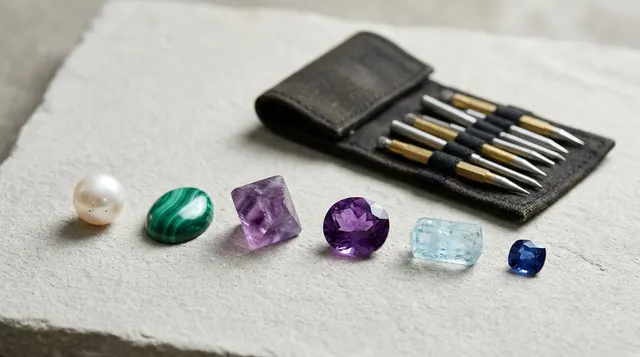
Mohs Hardness for Crystal Jewelry: Which Stones Scratch Easily?
Mohs hardness for crystal jewelry: which stones scratch easily, why 7 is the everyday-wear line, and how to match soft stones to rings, pendants and earrings.
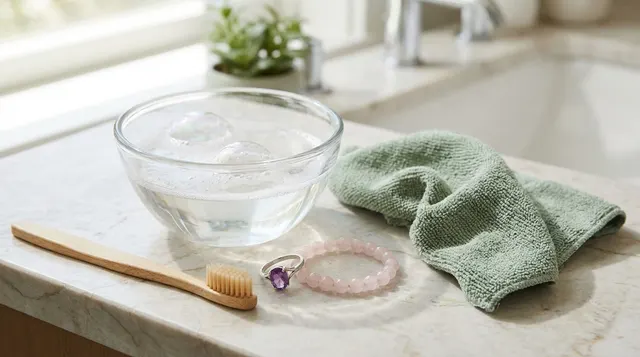
How to Clean Crystal Jewelry Without Damaging It
Clean crystal jewelry with warm water, mild soap and a soft brush. Which stones must skip ultrasonic, steam and chemical cleaners, and why GIA says so.
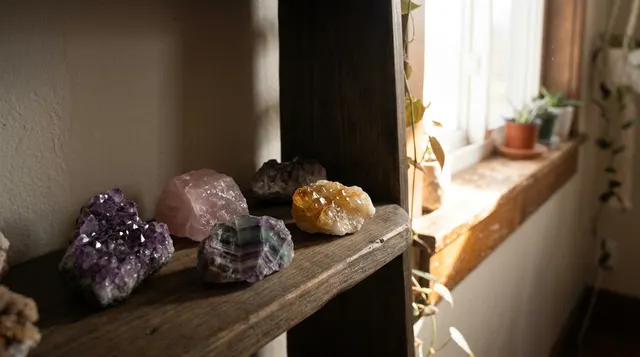
Which Crystals Fade in Sunlight? A Stone-by-Stone Guide
Which crystals fade in sunlight: what GIA says about amethyst, citrine, kunzite, topaz and rose quartz, why dyed stones fade, and how to display stones safely.
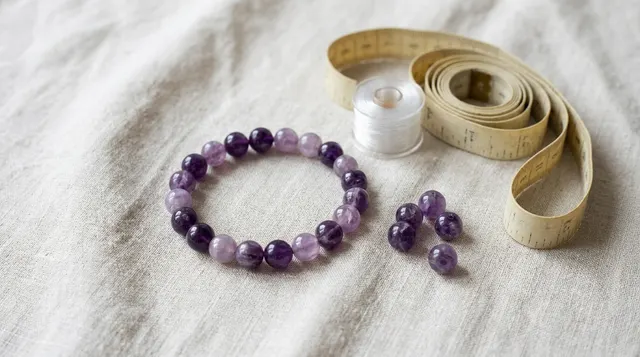
Crystal Bead Bracelet Size Guide: Wrist Size and Bead mm
How to measure your wrist, how much length to add for 4 to 12 mm beads, how many beads a bracelet needs, and how bead size changes weight and fit.
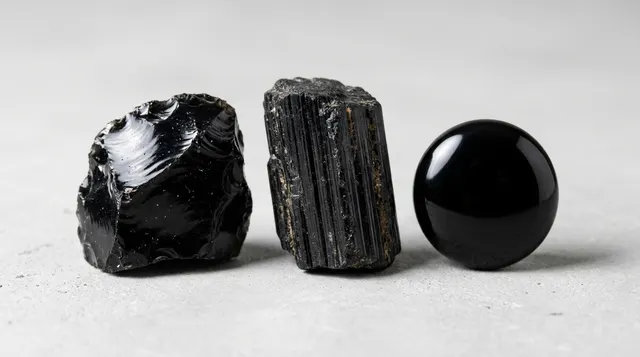
Obsidian vs Black Tourmaline vs Onyx: How to Tell Them Apart
Obsidian is volcanic glass, black tourmaline is a striated crystal, black onyx is dyed chalcedony. Shape, fracture, banding and lab tests that tell them apart.
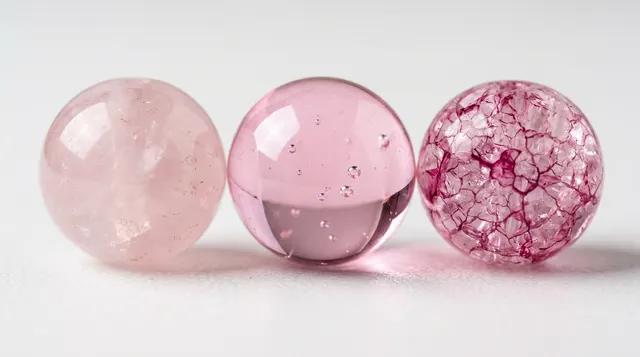
Rose Quartz vs Pink Glass vs Dyed Quartz: How to Tell
How to tell natural rose quartz from pink glass and dyed quartz: color, clarity, gas bubbles, dye-filled cracks, hardness, FTC disclosure rules and lab tests.