Which Crystals Fade in Sunlight? A Stone-by-Stone Guide
Quick Answer
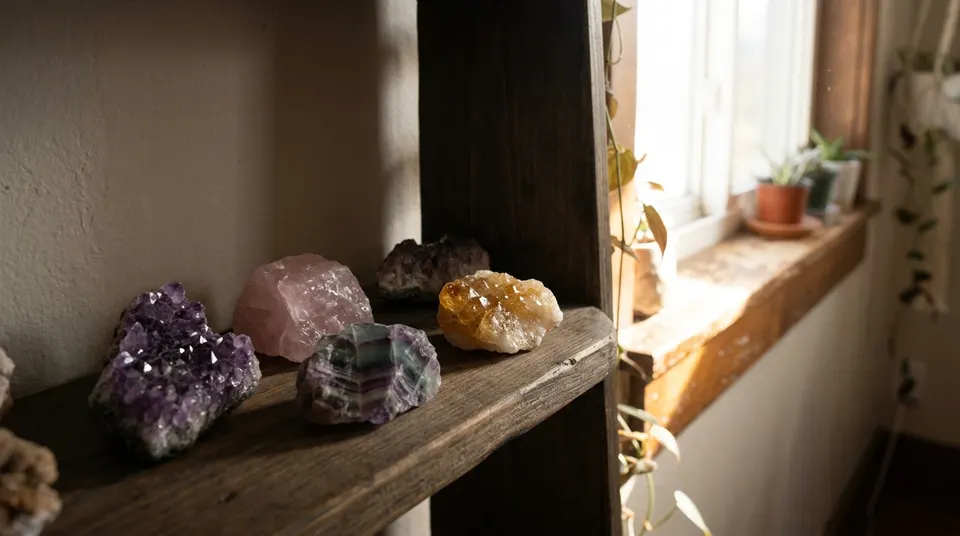
The crystals most likely to fade in sunlight are kunzite, amethyst, citrine and topaz, which GIA lists as gems that can fade or change color with prolonged light exposure. Some rose quartz fades too, depending on where it was mined. Dyed stones and some irradiated gems are also at risk. Aquamarine, by contrast, has light-stable color. Store sensitive stones in a closed box and display them away from direct sun.
On this page
Key Takeaways
- GIA names citrine, amethyst, kunzite and topaz as gems that can fade or change color with prolonged exposure to light.
- Kunzite is the most light-sensitive stone in this guide: GIA says both natural and treated kunzite can fade with heat or intense light.
- Rose quartz is generally stable, but GIA notes that material from some deposits fades in natural light.
- Dyed stones and some irradiated gems are the other big risk: some dyes fade under the ultraviolet in sunlight.
- Fading is slow and cumulative, so a closed box or a shelf away from windows is the simplest fix.
Why Do Some Crystals Fade in Sunlight?
Color fading is a stability problem, not a hardness problem. GIA defines stability as how well a gemstone can withstand exposure to chemicals, light, and changes in temperature or humidity, and it lists stability alongside hardness and toughness as one of the three parts of durability [1]. A stone can be hard enough to resist scratches and still lose color on a windowsill. Amethyst, citrine and rose quartz all rate 7 on the Mohs scale, yet their light behavior is quite different.
There are three main reasons a stone loses color in light:
- Unstable color centers. In many gems, color comes from defects in the crystal lattice that trap electrons. Light, especially its ultraviolet part, can slowly release them, and the color pales. This is why some colors that were created or strengthened by irradiation do not last.
- Unstable dyes. Dye is added to porous or cracked stones to give them a stronger or different color. GIA notes that some dyes are unstable with exposure to the ultraviolet in sunlight and can fade over time [2].
- Heat that comes with light. Sunlight through glass and hot display lamps also warm a stone. GIA warns that abrupt temperature changes can fracture amethyst and citrine, and that long-term heat and light can damage most organic gems, such as amber and pearls.
Fading is gradual. A stone will not change color in an afternoon outdoors, and wearing a ring or pendant in daylight is normal use. The risk is months or years of strong, direct light in the same spot, which is exactly what a sunny shelf provides.
Which Crystals Fade in Sunlight? Stone by Stone
The grid below sorts common stones by what GIA's care and treatment pages say about their color in light. "Can fade" means GIA states that some material fades with prolonged intense light, not that every piece will.
| Stone | Mohs hardness | What GIA says about light | Practical note |
|---|---|---|---|
| Kunzite | 6.5 to 7 | Color can fade with prolonged heat or intense light, natural or treated | Keep out of sun; suits pendants and low-wear pieces |
| Amethyst | 7 | Some color can fade with prolonged intense light | Display away from windows |
| Citrine | 7 | Some color can fade with prolonged intense light | Same as amethyst |
| Topaz | not covered here | Can fade or change color with prolonged light | Blue irradiated topaz is very stable unless heated |
| Rose quartz | 7 | Generally stable; some deposits fade in natural light | Low risk, but avoid years on a sunny sill |
| Aquamarine | 7.5 to 8 | Color is stable against light exposure | Light is not the concern; avoid heat |
| Dyed stones | varies | Some dyes fade under UV in sunlight | Treat as light-sensitive |
Kunzite: the most light-sensitive
Kunzite, the pink to violet variety of spodumene, is the stone GIA is most direct about. GIA says its color can fade with prolonged exposure to heat or intense light, and that kunzite which was irradiated and then heated to improve its color can fade the same way [3]. It rates 6.5 to 7 on the Mohs scale but has poor toughness because of its cleavage, so it suits pendants and pieces that see little wear. Kunzite is a stone to wear, then put away in the dark.
Amethyst and citrine
GIA uses the same wording for both quartz varieties: some amethyst color can fade with prolonged exposure to intense light, and some citrine color can fade the same way [4] [5]. Both rate 7 on the Mohs scale and have good toughness, so they work in any jewelry type. The word "some" matters: plenty of amethyst holds its color for decades indoors, but a deep purple point is not a good candidate for a permanent windowsill spot.
Much of the citrine on the market is heat-treated amethyst. GIA describes heat treatments as durable and permanent under normal handling [2]. If you are unsure which kind you own, our guide to natural citrine vs heat-treated amethyst explains the visual clues and their limits.
Topaz
GIA's durability overview groups topaz with citrine, amethyst and kunzite as gems that can fade or change color from prolonged light [1]. The exception is blue topaz: GIA's treatment guide says blue topaz, diamond and quartz tend to have very stable irradiated colors as long as they are not exposed to high temperatures.
Rose quartz: usually stable, with an asterisk
GIA's care page says rose quartz is generally stable when exposed to light and heat [6]. GIA's gem description adds a qualification: material from some deposits fades when exposed to natural light, though its color can be restored by irradiation [7]. Both statements can be true at once. Most rose quartz is a low risk, and a buyer has no easy way to know which deposit a given piece came from, so long-term direct sun is still worth avoiding.
Aquamarine and other stable stones
Aquamarine is a useful contrast. GIA states that its color is stable against light exposure and rates it 7.5 to 8 on the Mohs scale [8]. Heat is the concern there, not light. For stones that GIA's care pages do not discuss, such as fluorite, the sources we could verify do not settle the question, so the cautious default is the same: no permanent spot in direct sun. The care chart puts sunlight notes for all 20 crystal profiles side by side.
Do Dyed and Treated Crystals Fade Faster?
Often, yes. A treatment that adds color can also add a weak point. GIA explains that the durability of a dyed gem ultimately depends on the stability of the dye itself, that some dyes are unstable under the ultraviolet in sunlight, and that dyes can also be removed by solvents such as alcohol or acetone [2]. A bright stone that slowly turns patchy or pale is a common sign of dye, not of a natural color change.
Irradiation is mixed. GIA says some irradiated gems fade on exposure to strong light, and that in beryl and spodumene the irradiated color tends to be short lived in bright light. Irradiated blue topaz and quartz, on the other hand, tend to stay stable unless heated. If a stone's color seems unusually vivid, read our guide on how to spot dyed crystals, and ask the seller about treatments. GIA notes that disclosing treatments is legally required for anyone selling a gem. Only a gem lab can confirm a treatment with certainty; a loupe and a cotton swab can raise suspicion, not prove it.
How Do You Display and Store Crystals So They Don't Fade?
The goal is to cut the total dose of strong light and heat a stone receives over time. The ladder below runs from the least exposure to the most.
Practical habits that follow from GIA's guidance:
- Keep sensitive stones in the dark when not worn. A lined jewelry box or a fabric pouch inside a drawer blocks light and stops stones from scratching each other.
- Move displays off windowsills. A sunny sill delivers years of strong light and warm afternoons in the same spot. A cabinet on an inside wall is a safer showcase.
- Watch the heat from lamps. GIA advises that amethyst and citrine should not be subjected to heat and that abrupt temperature changes can fracture them. Avoid placing stones right under hot spotlights or moving them from a cold car to a hot window.
- Keep a reference piece. If you own a strand or set of matching stones, store one bead or small stone in a closed box. Comparing a displayed 10 mm (about 3/8 inch) bead against its boxed twin once a year shows fading long before memory would.
- Clean gently. Warm, soapy water is the method GIA describes as safe for amethyst, citrine, rose quartz, kunzite and aquamarine. GIA also lists fluorite and feldspars such as moonstone among gems sensitive to heat and temperature changes in ultrasonic cleaners [9]. See our guide to cleaning crystal jewelry without damage for each method.
Is My Stone Faded, Dyed, or Just Different?
A paler stone is not always a faded one. Natural amethyst often shows color zoning, with darker and lighter bands, and two stones from the same strand can differ simply because they came from different rough. Use the flow below to narrow down what you are seeing, and remember that only a gem lab can say for certain what caused a color.
A few honest limits apply. Faded color usually does not come back on its own, and while GIA notes that some faded rose quartz can be restored by irradiation, that is a lab process, not a home fix. Never try to test a stone by heating it, and never scratch-test finished jewelry or a seller's stone. If a piece matters to you, a lab report from GIA or another recognized gem laboratory is the only way to know whether its color is natural, treated, or dyed. When choosing new jewelry for a sunny climate or daily outdoor wear, the jewelry finder can filter for stones with more stable color.
Useful for this guide
Large Jewelry Box for Women: 5-Layer Organizer
Check price on AmazonFaux Leather Decorative Box, Large Wooden Structure Keepsake Box Accessory Organizer
Check price on Amazon2 Layers Jewelry Box for Women -Black
Check price on Amazon
Frequently Asked Questions
Can I put amethyst in the sun for a day?
A single day outdoors is very unlikely to cause visible change. GIA's warning is about prolonged exposure to intense light, meaning months or years in the same sunny spot. Wearing amethyst jewelry in daylight is normal use. The risk is a permanent windowsill display.
Does rose quartz fade in sunlight?
Usually not much. GIA describes rose quartz as generally stable in light and heat, but also notes that material from some deposits fades in natural light. Since you rarely know where a piece was mined, keep it out of long-term direct sun as a precaution.
Can faded crystals get their color back?
Not on their own. GIA notes that the color of some faded rose quartz can be restored by irradiation, which is a laboratory treatment. Home methods such as heating can damage stones; GIA warns that abrupt temperature changes can fracture amethyst and citrine.
Which crystals are safe to display in a sunny room?
Aquamarine is one of the few common stones GIA describes as color-stable in light. Hard, durable stones still dislike heat, though, so even stable stones are better on a shelf out of direct sun than on a hot windowsill.
Do glass display cases stop fading?
They help with dust and handling but do not block light. A closed cabinet on an inside wall, away from windows and hot lamps, is what reduces fading. For the most sensitive stones, a closed box is safer.
Our Take
In our view, fading is the most overlooked part of crystal care, because it happens too slowly to notice day to day. We would treat any colored stone as light-sensitive until a reliable source says otherwise, and we would never give kunzite, dyed stones, amethyst or citrine a permanent sunny spot. A closed box costs nothing in color and keeps stones from scratching each other at the same time. We also think any display advice that puts colored stones on a sunny sill steers buyers toward the one habit that most reliably dulls them. If a color looks too vivid to be true, assume dye until a lab says otherwise.
Sources
- More than the Mohs Scale: Understanding Gem Durability. GIA.
- An Introduction to Gem Treatments. GIA.
- Kunzite Care and Cleaning. GIA.
- Amethyst Care and Cleaning Guide. GIA.
- Citrine Care and Cleaning. GIA.
- Rose Quartz Care and Cleaning. GIA.
- Rose Quartz Description. GIA.
- Aquamarine Care and Cleaning Guide. GIA.
- Ultrasonic Cleaners for Gems: What You Need to Know. GIA.
Crystal Field Guide covers mineralogy, identification and care. We make no claims that any stone affects health, mood or fortune. Home checks can only suggest an answer; for certainty about a valuable stone, ask an accredited gem lab. Spotted an error? Tell us.
More Crystal Guides
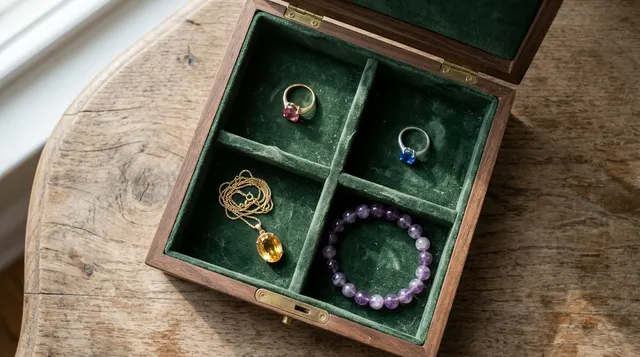
How to Store Crystal Jewelry and Stones Without Scratches
Store crystal jewelry by hardness: a pouch or slot per piece, soft stones and pearls kept apart, away from strong light, heat and plastic bags. Stone by stone.
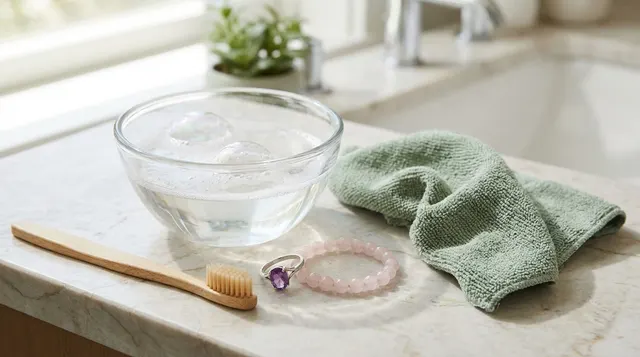
How to Clean Crystal Jewelry Without Damaging It
Clean crystal jewelry with warm water, mild soap and a soft brush. Which stones must skip ultrasonic, steam and chemical cleaners, and why GIA says so.
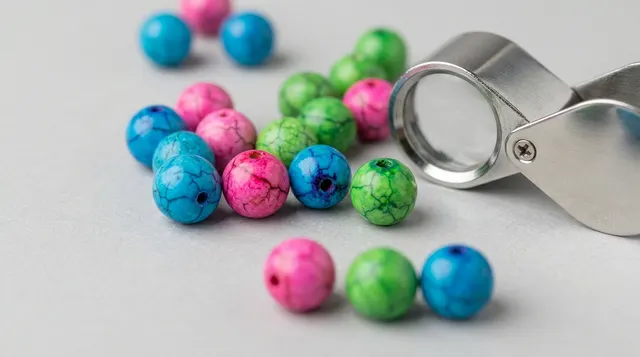
How to Spot Dyed Crystals and Stones
How to spot dyed crystals: color pooled in cracks and drill holes, hues not found in nature, howlite sold as turquoise, and when you need a gem lab to be sure.
Is Your Citrine Real? Natural Citrine vs Heat-Treated Amethyst
How to tell natural citrine from heat-treated amethyst: color, zoning, dichroism and what a gem lab checks, plus why most citrine on the market is heated.
Mohs Hardness for Crystal Jewelry: Which Stones Scratch Easily?
Mohs hardness for crystal jewelry: which stones scratch easily, why 7 is the everyday-wear line, and how to match soft stones to rings, pendants and earrings.
Crystal Bead Bracelet Size Guide: Wrist Size and Bead mm
How to measure your wrist, how much length to add for 4 to 12 mm beads, how many beads a bracelet needs, and how bead size changes weight and fit.