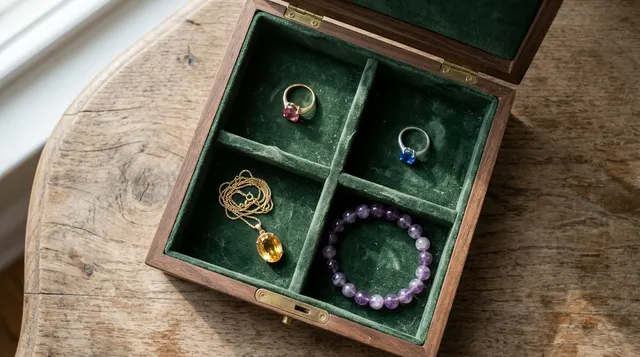
How to Store Crystal Jewelry and Stones Without Scratches
Store crystal jewelry by hardness: a pouch or slot per piece, soft stones and pearls kept apart, away from strong light, heat and plastic bags. Stone by stone.
Identification, hardness, cleaning, storage and sizing, explained with gemology sources. Every guide lists its sources and is honest about what a home check can and cannot prove.
Store crystal jewelry by hardness: a pouch or slot per piece, soft stones and pearls kept apart, away from strong light, heat and plastic bags. Stone by stone.
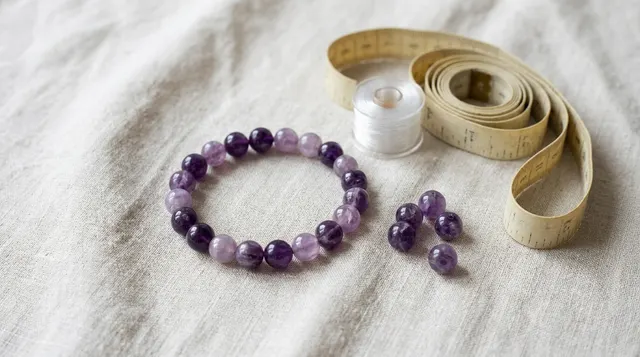
How to measure your wrist, how much length to add for 4 to 12 mm beads, how many beads a bracelet needs, and how bead size changes weight and fit.
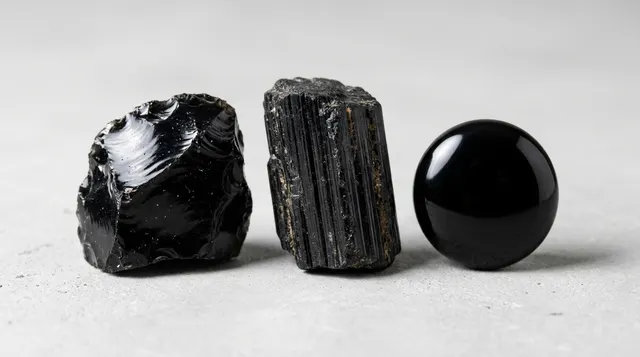
Obsidian is volcanic glass, black tourmaline is a striated crystal, black onyx is dyed chalcedony. Shape, fracture, banding and lab tests that tell them apart.
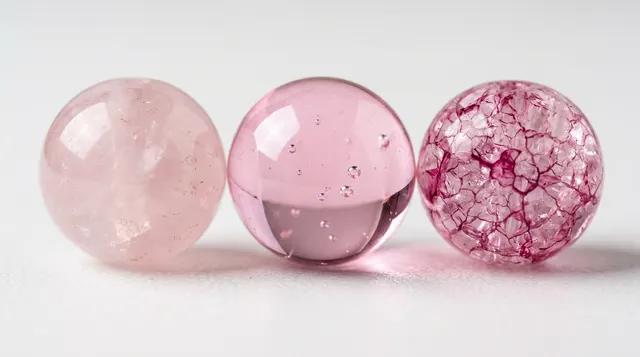
How to tell natural rose quartz from pink glass and dyed quartz: color, clarity, gas bubbles, dye-filled cracks, hardness, FTC disclosure rules and lab tests.
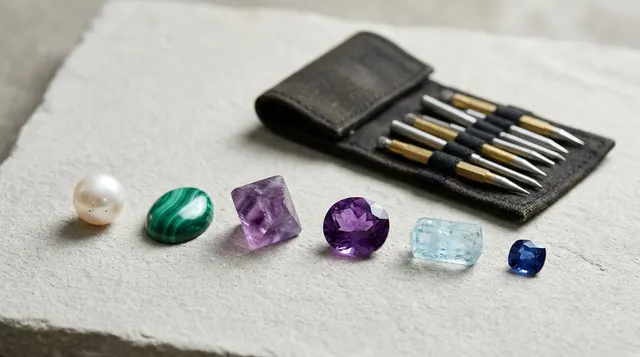
Mohs hardness for crystal jewelry: which stones scratch easily, why 7 is the everyday-wear line, and how to match soft stones to rings, pendants and earrings.
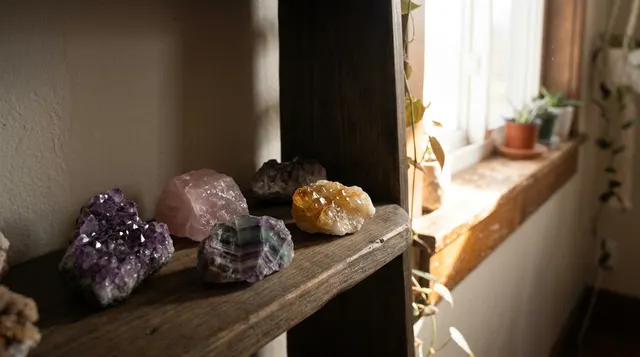
Which crystals fade in sunlight: what GIA says about amethyst, citrine, kunzite, topaz and rose quartz, why dyed stones fade, and how to display stones safely.
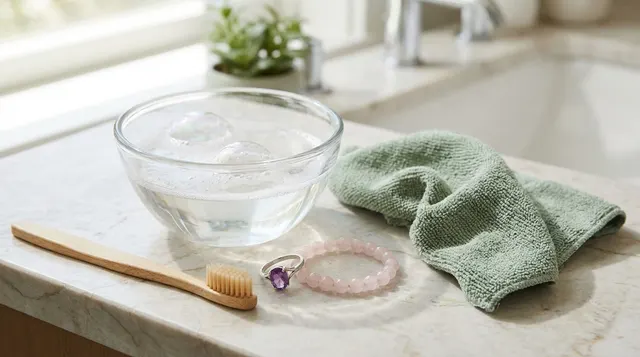
Clean crystal jewelry with warm water, mild soap and a soft brush. Which stones must skip ultrasonic, steam and chemical cleaners, and why GIA says so.
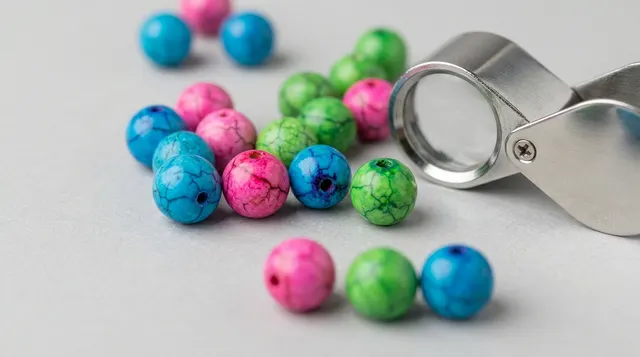
How to spot dyed crystals: color pooled in cracks and drill holes, hues not found in nature, howlite sold as turquoise, and when you need a gem lab to be sure.
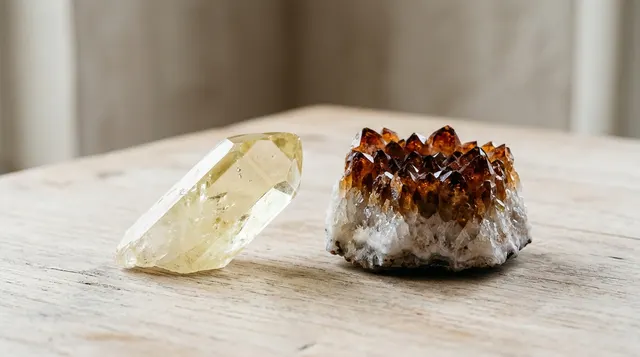
How to tell natural citrine from heat-treated amethyst: color, zoning, dichroism and what a gem lab checks, plus why most citrine on the market is heated.
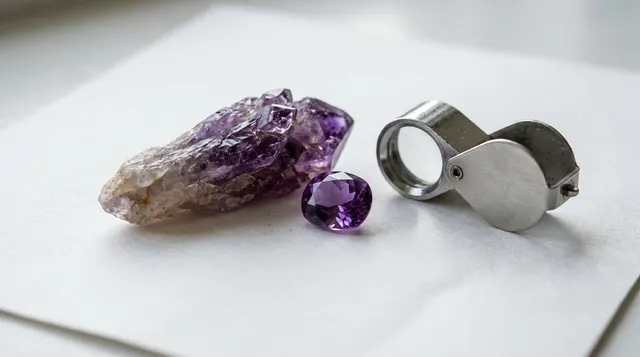
How to tell real amethyst from synthetic quartz and glass: color zoning, bubbles, refractive index, heat treatment, and when only a gem lab can be sure.