How to Clean Crystal Jewelry Without Damaging It
Quick Answer
To clean crystal jewelry safely, soak it briefly in warm water with a few drops of mild dish soap, brush gently with a soft toothbrush, rinse in a bowl of clean water and pat dry with a lint-free cloth. Skip ultrasonic and steam cleaners, bleach, ammonia and abrasive polishes unless a jeweler confirms the stone can take them. Porous, treated and heat-sensitive stones should only ever be wiped or gently washed.
On this page
- What Is the Safest Way to Clean Crystal Jewelry at Home?
- Which Crystals Should Never Go in an Ultrasonic Cleaner?
- How Does Hardness Change the Way You Clean a Stone?
- Which Stones Need Special Care, Stone by Stone?
- How Should You Clean Dyed, Oiled or Treated Crystals?
- Which Household Cleaners Damage Crystal Jewelry?
- Frequently Asked Questions
- Our Take
- Sources
Key Takeaways
- Warm water, a few drops of mild dish soap and a soft, clean toothbrush is the safe default for nearly every crystal and gemstone.
- GIA does not list any gemstone as safe in an ultrasonic cleaner; it names moonstone, fluorite, malachite, lapis lazuli, opal and turquoise among the stones to keep out.
- Pearls, coral, turquoise and other porous or organic gems should stay away from ammonia, bleach and other chemicals.
- Oiled, waxed, dyed or filled stones need extra care, and US sellers are expected to disclose treatments that create special care needs.
- Rinse in a bowl, not over an open drain, and check that stones are still secure in their settings before you wear the piece again.
What Is the Safest Way to Clean Crystal Jewelry at Home?
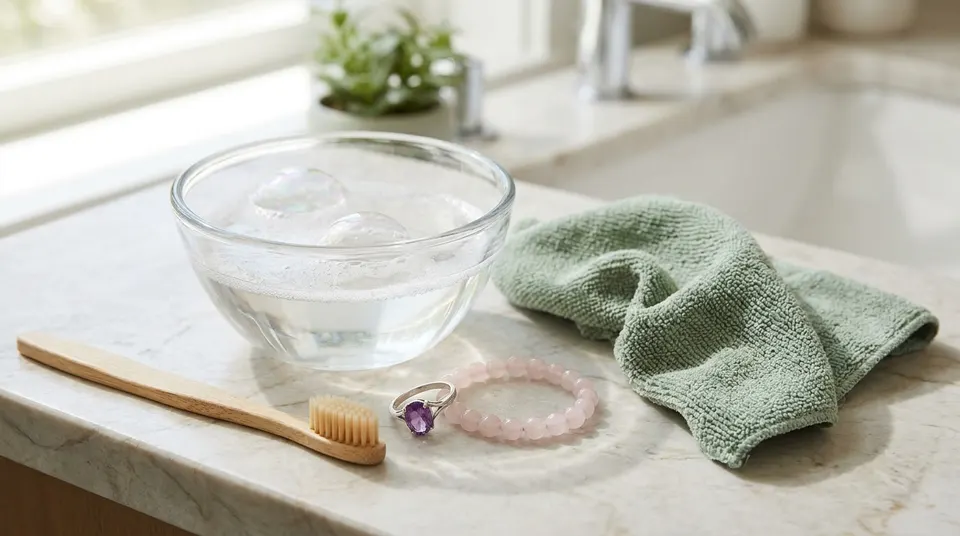
Warm water, mild soap and a soft brush is the one method GIA describes as safe for delicate and porous gems. Its consumer guide calls warm water with a few drops of mild dish soap "the safest alternative" for jewelry set with delicate or porous gemstones or pearls, and adds that a soft cloth is always safe for wiping away dust and skin oils [1].
Here is the routine step by step:
- Check the piece first. Look for loose stones, a cracked bead or a stretched cord. Cleaning a damaged piece can finish the job the damage started.
- Fill a small bowl with warm, not hot, water. Add a few drops of mild dish soap. Hot water is a needless risk for heat-sensitive stones (more on those below).
- Soak briefly. A few minutes loosens lotion and dust. Skip the soak for porous stones and for strung beads; just wipe them.
- Brush gently. Use a soft, clean toothbrush that you keep only for jewelry, as GIA suggests. Work around the back of the setting, where grime collects behind the stone.
- Rinse in a second bowl of clean water. GIA warns to make sure jewelry cannot fall down the drain, and a bowl is the simplest way to do that.
- Dry with a soft, lint-free cloth and let the piece air-dry on a towel before you put it away.
For everyday dust on a ring or pendant, the cloth alone is often enough. Bead bracelets on stretch cord are a special case: a damp cloth over each bead is gentler than a soak, because water sitting in the drill holes and on the cord takes a long time to dry. If you are unsure which stones are in a piece, the care chart lists hardness, water and cleaning notes for each stone side by side.
Which Crystals Should Never Go in an Ultrasonic Cleaner?
An ultrasonic cleaner shakes dirt loose with high-frequency sound waves in a warm bath, and many stones cannot take it. GIA's guide to ultrasonic cleaners does not name a single gemstone as safe; it only lists stones to keep out and says even transparent ruby and sapphire "require caution." [2].
GIA's list falls into four groups:
- Heat- and temperature-sensitive stones, treated or not: tanzanite, sunstone, moonstone, fluorite, iolite, kunzite, lapis lazuli, malachite, opal, topaz, turquoise and zircon.
- Stones impregnated or coated with oil, plastic or wax: GIA names emerald, lapis lazuli, malachite and opal as commonly treated this way.
- Fracture-filled stones: fillings in surface-reaching breaks are not permanent, and the heat and shaking can damage or remove them.
- Organic and porous materials: pearls, coral, tortoise shell, ivory, shell cameos, jet and amber.
GIA also advises against the tank for heat-treated gems and for star ruby and star sapphire, and points out that shaking can loosen stones in their settings. That is why the safe habit is to check every stone before and after any professional cleaning.
What about quartz? Amethyst, citrine and clear quartz are not on GIA's "avoid" list, but they are not on a "safe" list either, because GIA does not publish one. Much citrine on the market is heat-treated amethyst (see natural vs heat-treated citrine), and GIA lists heat-treated gems among those to keep out. For any crystal you own, soap and water at home and an ultrasonic only in a jeweler's hands is the cautious line.
Steam cleaners are not covered in GIA's ultrasonic guide, but steam is heat. If a stone is on GIA's heat-sensitive list or has an oil, wax or filler treatment, it is reasonable to keep steam away from it too, and to ask a jeweler before steaming anything you cannot identify with confidence.
How Does Hardness Change the Way You Clean a Stone?
Hardness is a material's resistance to scratching, and the Mohs scale ranks it from talc at 1 to diamond at 10, with fluorite at 4 and quartz at 7 [4]. Any material scratches anything softer than itself, so hardness decides what a stone can safely touch while you clean it.
GIA's Gem Encyclopedia gives these values: pearl 2.5 to 3 [5], turquoise 5 to 6 [6], opal 5 to 6.5 [7], moonstone 6.0 to 6.5 [8] and amethyst 7 [9].
Three practical rules follow:
- Never use abrasives. GIA warns against the abrasives in some metal polishes and toothpaste. They polish metal by scratching it, and they can dull a softer stone the same way.
- Clean pieces one at a time. In a shared bowl, a quartz bracelet can grind against a fluorite pendant or a strand of pearls.
- Polish the metal, not the stone. A silver cloth works on silver, but keep it off soft or porous stones such as malachite and fluorite.
Hardness is not the same as toughness: a hard stone can still chip or crack along a weak plane if it is knocked or heated unevenly. That is why a 7 on the scale is not a free pass for hot water or ultrasonic cleaning.
Which Stones Need Special Care, Stone by Stone?
The table pulls together the points above for stones common in crystal jewelry. Ultrasonic advice comes from GIA's list; "no steam" for heat-sensitive or treated stones is a cautious reading of the same list, since steam is heat. Hardness values come from GIA and the Open University pages cited above; a dash means no value was taken from those sources.
| Stone | Mohs hardness | Ultrasonic | Steam | Home method and notes |
|---|---|---|---|---|
| Amethyst, clear quartz | 7 | Ask a jeweler | Ask a jeweler | Warm soapy water. Heat-treated quartz (much citrine) belongs with "avoid". |
| Moonstone | 6.0-6.5 | No (heat-sensitive) | No | Lukewarm soapy water, soft brush. |
| Opal | 5-6.5 | No | No | Brief lukewarm wash or damp cloth; may be oil, plastic or wax treated. |
| Turquoise | 5-6 | No | No | Damp cloth; porous, keep away from chemicals. |
| Fluorite | 4 | No (heat-sensitive) | No | Gentle wash; clean apart from harder pieces. |
| Lapis lazuli | - | No (heat-sensitive, often treated) | No | Damp cloth or brief wash; no solvents. |
| Malachite | - | No (heat-sensitive, often treated) | No | Damp cloth or brief wash; never sand or cut it. |
| Pearl | 2.5-3 | No (organic) | No | Damp cloth only; no chemicals. |
Lapis lazuli and malachite appear on two of GIA's lists at once: heat-sensitive and commonly impregnated with oil, plastic or wax. Moonstone is on the heat-sensitive list even when untreated. And if you are cleaning a piece because you are not sure what it is, the amethyst identification guide explains why a gem lab, not a home test, settles identity.
Malachite is a copper mineral. Cleaning it with water and a cloth is fine, but it should not be cut, sanded or ground at home, and it should never be soaked to make drinking water.
How Should You Clean Dyed, Oiled or Treated Crystals?
Treat any stone you suspect is dyed, oiled, waxed, coated or filled as the most delicate stone in the drawer. GIA's ultrasonic guide warns that standard cleaning solutions can damage delicate gem materials and surface finishes and suggests "just warm, soapy water" for them [2]. For a treated stone, keep even that brief: a quick wash or a damp cloth, then dry it straight away.
US law backs this up from the seller's side. The FTC Jewelry Guides say it is unfair or deceptive to fail to disclose a gemstone treatment that is not permanent, that creates special care requirements, or that has a significant effect on the stone's value; the FTC also recommends that sellers tell buyers what the special care requirements are [3]. For online sales, the disclosure should appear in the product description itself. If a listing says "treated" or "special care", follow those care notes over any general cleaning advice, including this guide's.
Dyed beads are common in crystal jewelry, especially in blues, greens and bright pinks. Our guide on how to spot dyed crystals shows where dye collects, and it is a good reason to keep alcohol, nail polish remover and other solvents well away from colored beads.
Which Household Cleaners Damage Crystal Jewelry?
Several cleaners that work on metal can harm the stones set in it. GIA's consumer guide flags these [1]:
- Chlorine and other bleaching agents can damage some gemstones and metal alloys. Take rings off before cleaning with bleach or swimming in a chlorinated pool.
- Ammonia-based cleaners should not touch organic and porous gems such as coral, pearl and turquoise. Most diamonds tolerate a mild ammonia solution unless they have a non-permanent coating.
- Abrasives in some metal polishes and toothpaste scratch.
- Commercial jewelry dips suit most plain gold jewelry, but check the label before using one on a piece with stones.
GIA's position on porous gems is blunt: coral, turquoise and pearls "should always be kept away from any chemicals." That includes perfume, hairspray and lotion, so it makes sense to put jewelry on after them and take it off before washing up. When you choose new pieces, the jewelry finder can filter for stones that suit daily wear.
Useful for this guide
2PCS Jewelry Cleaning Cloth, Silver Polishing Cloth Jewelry,2 PCS Ultra-Soft Brushes
Check price on Amazon3 Pack Large Silver Polishing Cloth
Check price on AmazonSilver Cleaning Kit with Ultra-Soft Brushes & Polish Cloths
Check price on Amazon
Frequently Asked Questions
Can I clean crystal jewelry with vinegar or lemon juice?
It is not a good idea. GIA's guidance for delicate, porous and treated gems is warm water with mild soap, not acids or other household chemicals. Soap and water already removes everyday grime, so there is nothing to gain from the extra risk.
Is it safe to put amethyst or clear quartz in an ultrasonic cleaner?
Quartz is not on GIA's list of stones to keep out, but GIA does not publish a list of stones that are safe either. A lot of quartz on the market is heat-treated or has fractures, which belong in the "avoid" groups. Clean quartz at home with warm soapy water and leave ultrasonic cleaning to a jeweler who can inspect the stone first.
How often should I clean my crystal jewelry?
A quick wipe with a soft, dry cloth after wearing removes skin oils and lotion before they build up. A gentle soap-and-water wash every few weeks suits pieces worn often, such as rings and bracelets. Pieces with porous stones or pearls should be wiped rather than washed.
Can I wear crystal jewelry in the shower or pool?
It is better to take it off. Shampoo and soap leave a film that dulls stones, chlorine can damage some gems and metal alloys, and water soaks into stretch cord and porous stones. Put the piece back on once you are dry.
How do I know if my stone is treated?
Often you cannot tell at home. Check the seller's description, because the FTC expects sellers to disclose treatments that are not permanent or create special care needs. For certainty, a gem lab such as GIA can identify many treatments with laboratory instruments.
Our Take
We think the safest crystal jewelry routine is also the most boring one: a soft cloth after wearing, and warm soapy water with a soft brush when the piece really needs it. In our view, home ultrasonic and steam cleaners are the wrong tool for crystal jewelry, because so many popular stones are heat-sensitive, porous or treated, and GIA itself names none as safe. We would rather see a piece cleaned a little less thoroughly than see an opal crack or a lapis bead lose its finish. When a stone's identity or treatment is unknown, we would clean it as if it were the most delicate stone in the drawer, and check the care chart before trying anything stronger.
Sources
- Holiday Buying Guide: How to Clean Jewelry. GIA.
- Ultrasonic Cleaners for Gems: What You Need to Know. GIA.
- 16 CFR Part 23, Guides for the Jewelry, Precious Metals, and Pewter Industries, § 23.24 Disclosure of treatments to gemstones. Federal Trade Commission (via govinfo).
- An introduction to minerals and rocks under the microscope: 1.3.6 Hardness. Open University.
- Pearl Description. GIA.
- Turquoise Description. GIA.
- Opal Description. GIA.
- Moonstone Description. GIA.
- Amethyst Description. GIA.
Crystal Field Guide covers mineralogy, identification and care. We make no claims that any stone affects health, mood or fortune. Home checks can only suggest an answer; for certainty about a valuable stone, ask an accredited gem lab. Spotted an error? Tell us.
More Crystal Guides
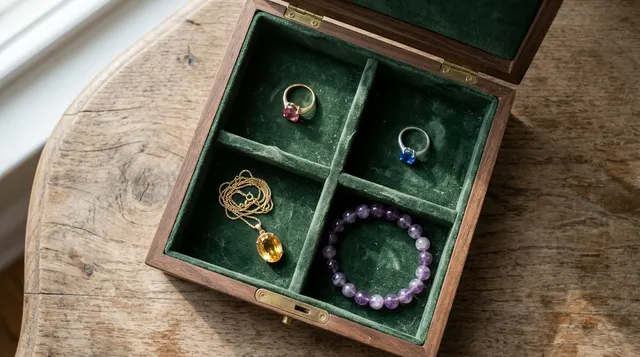
How to Store Crystal Jewelry and Stones Without Scratches
Store crystal jewelry by hardness: a pouch or slot per piece, soft stones and pearls kept apart, away from strong light, heat and plastic bags. Stone by stone.
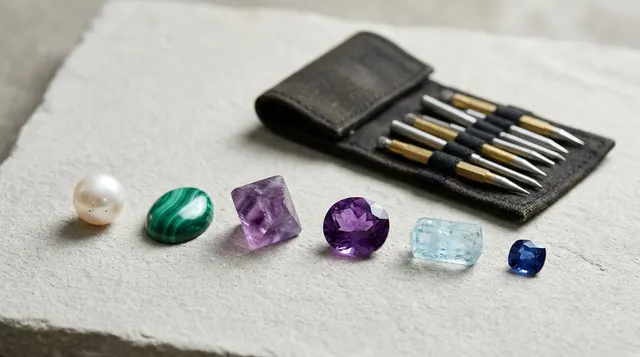
Mohs Hardness for Crystal Jewelry: Which Stones Scratch Easily?
Mohs hardness for crystal jewelry: which stones scratch easily, why 7 is the everyday-wear line, and how to match soft stones to rings, pendants and earrings.
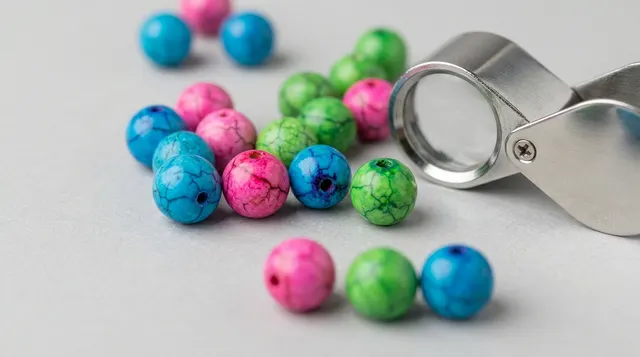
How to Spot Dyed Crystals and Stones
How to spot dyed crystals: color pooled in cracks and drill holes, hues not found in nature, howlite sold as turquoise, and when you need a gem lab to be sure.
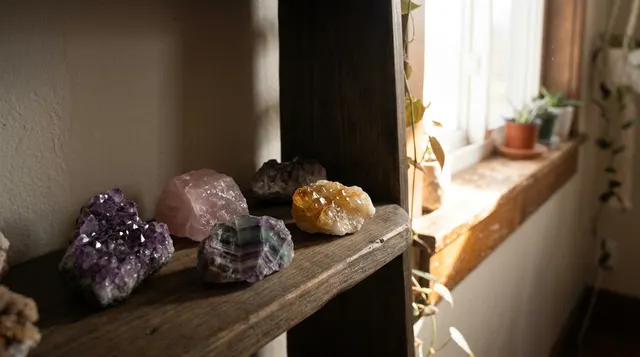
Which Crystals Fade in Sunlight? A Stone-by-Stone Guide
Which crystals fade in sunlight: what GIA says about amethyst, citrine, kunzite, topaz and rose quartz, why dyed stones fade, and how to display stones safely.
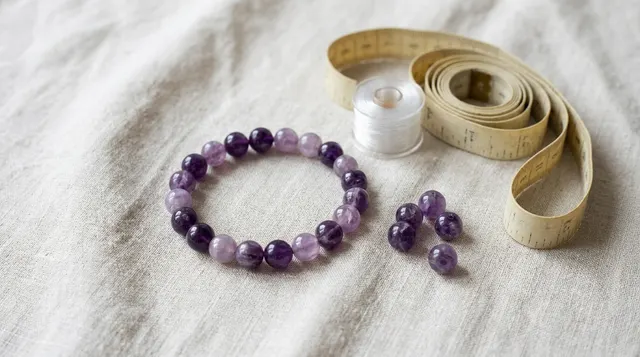
Crystal Bead Bracelet Size Guide: Wrist Size and Bead mm
How to measure your wrist, how much length to add for 4 to 12 mm beads, how many beads a bracelet needs, and how bead size changes weight and fit.
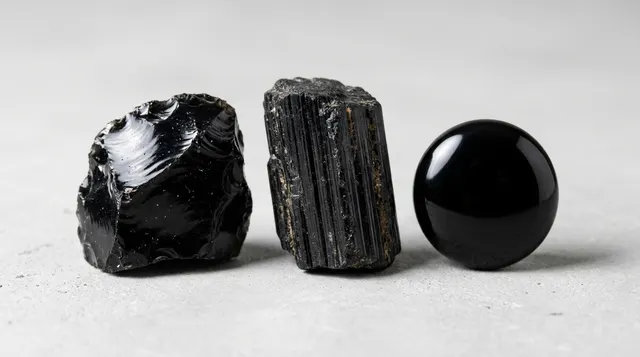
Obsidian vs Black Tourmaline vs Onyx: How to Tell Them Apart
Obsidian is volcanic glass, black tourmaline is a striated crystal, black onyx is dyed chalcedony. Shape, fracture, banding and lab tests that tell them apart.